No more missed school days: why girls in West Africa belong in the classroom during their period
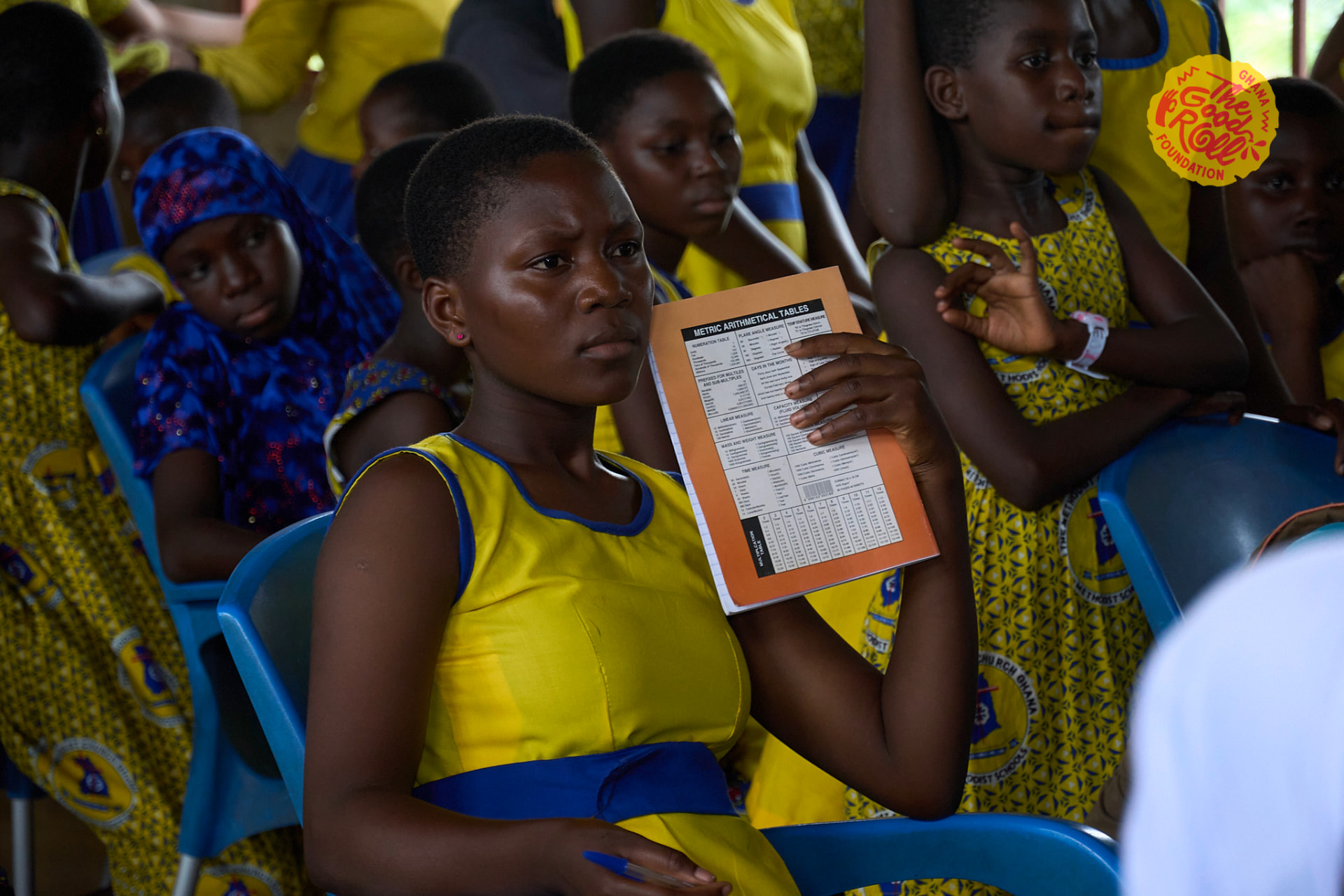
Imagine you are fourteen, you're in year two of secondary school and you have a test. But it's that week of the month. You have no sanitary pads, there's no lockable toilet at school and the boys in your class laugh when a stain shows up on your uniform. So you stay home. Not for one day, but four or five. Every single month.
For thousands of girls in West Africa this is not a thought experiment, it is their reality. And we believe it has to end. No girl should have to stay home because she has her period.
The numbers: periods cost girls a fifth of their school year
According to UNESCO, on average 1 in 10 girls in sub-Saharan Africa misses school during her period. By some estimates this adds up to as much as 20% of a school year (World Bank). In some countries it is as many as 1 in 4 girls (UNICEF).
In Ghana, where The Good Roll Foundation works, the latest figures are just as stark:
- A May 2026 report estimates that around 95,000 Ghanaian girls miss school during their period because the right support is missing (Ghana News Agency, 2026).
- Over 31% of adolescent girls have never received any menstrual health education, which fuels stigma and absenteeism (UNICEF Ghana, 2026).
- Nearly 2 million schoolchildren in Ghana lack access to basic water and toilet facilities (UNICEF Ghana, 2026).
- In Northern Ghana, according to local NGOs and education officials, girls miss an average of 4 to 5 school days a month (GNA, 2025).
- Research in Burkina Faso, Niger and Nigeria confirms that menstruation is a real cause of school absence across the region (Hennegan et al., 2021).
Why do girls stay home? Four causes
1. Taboo and shame
In large parts of West Africa, menstruation is still a major taboo. Many girls don't know what is happening when they get their first period and feel frightened, confused and ashamed (GNA, 2026). The fear of being laughed at, often by boys, is reason enough for many girls to stay home.
2. No affordable pads
For many families, sanitary pads are simply unaffordable. Due to inflation, the price of a pack in Ghana more than doubled from 5 to 12 cedi, forcing poorer families to choose food over pads (Thomson Reuters Foundation). Girls turn to rags, leaves or even cow dung, risking infection.
3. No safe facilities at school
Without clean water, soap and a toilet with a door, you can't change. As a result, some girls wear the same pad for the entire school day (GNA, 2026).
4. Dangerous dependence
The darkest consequence: according to UNFPA in Ghana, men lure girls into sexual relationships in exchange for sanitary pads (Global Citizen). Period poverty is therefore not only an education issue, but also a matter of safety and human rights.
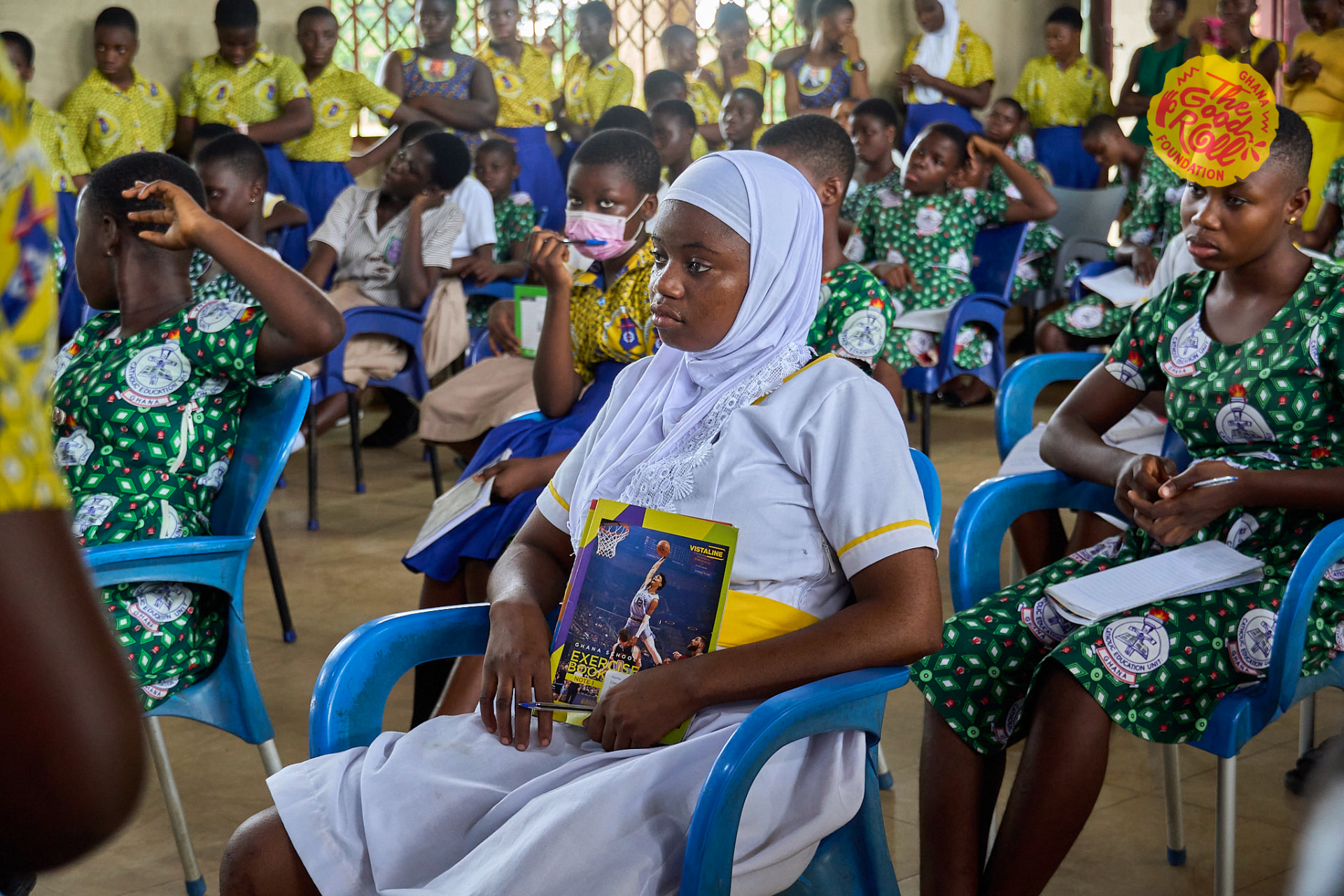
Why staying home must not be an option
Every missed school day adds up. Girls fall behind, get lower grades and are more likely to drop out altogether. Yet education is the key to an income of their own, marrying later, healthier families and stronger communities. One natural cycle should never put a girl's future at risk.
The good news: this problem can be solved. And we know how.
What works: education and products, together
Research shows that the combination makes the difference:
- In a pilot in Ghana, attendance rose by 9% after five months of pads combined with education. Education alone had a similar effect (Montgomery et al., PLOS ONE).
- In a large University of Oxford study in Uganda, absenteeism in schools without reusable pads or education was on average 17% higher after 18 months than in schools that received them (University of Oxford).
- Girls said reusable pads mainly took away their fear of leaking (Hennegan et al., 2017).
To be fair, not every study finds effects this large. That is exactly why we don't just hand out products, but take an approach that also tackles taboo and shame.
Our MHM programme: three pillars
The Good Roll Foundation works with the Ghana School Authority in the Volta Region (The Good Roll Foundation). Our Menstrual Hygiene Management (MHM) programme rests on three pillars.
Education for the whole class, boys and girls
Stigma doesn't disappear when only girls are taught. That's why we teach the whole class. When boys understand what menstruation is, there is less teasing and the classroom becomes a safe place. This is how we open the conversation and break the taboo from the ground up.
Peer-to-peer conversations with girls
Girls talk most easily with their peers. In small groups they share experiences, ask questions they wouldn't dare ask in class and learn from each other. This builds confidence and creates a network that lasts, even after we've gone.
Reusable sanitary pads
Every girl receives a pack of 5 reusable sanitary pads. They are sustainable, safe and last at least a year (The Good Roll Foundation). No more monthly costs for the family, no waste and no more reason to stay home.
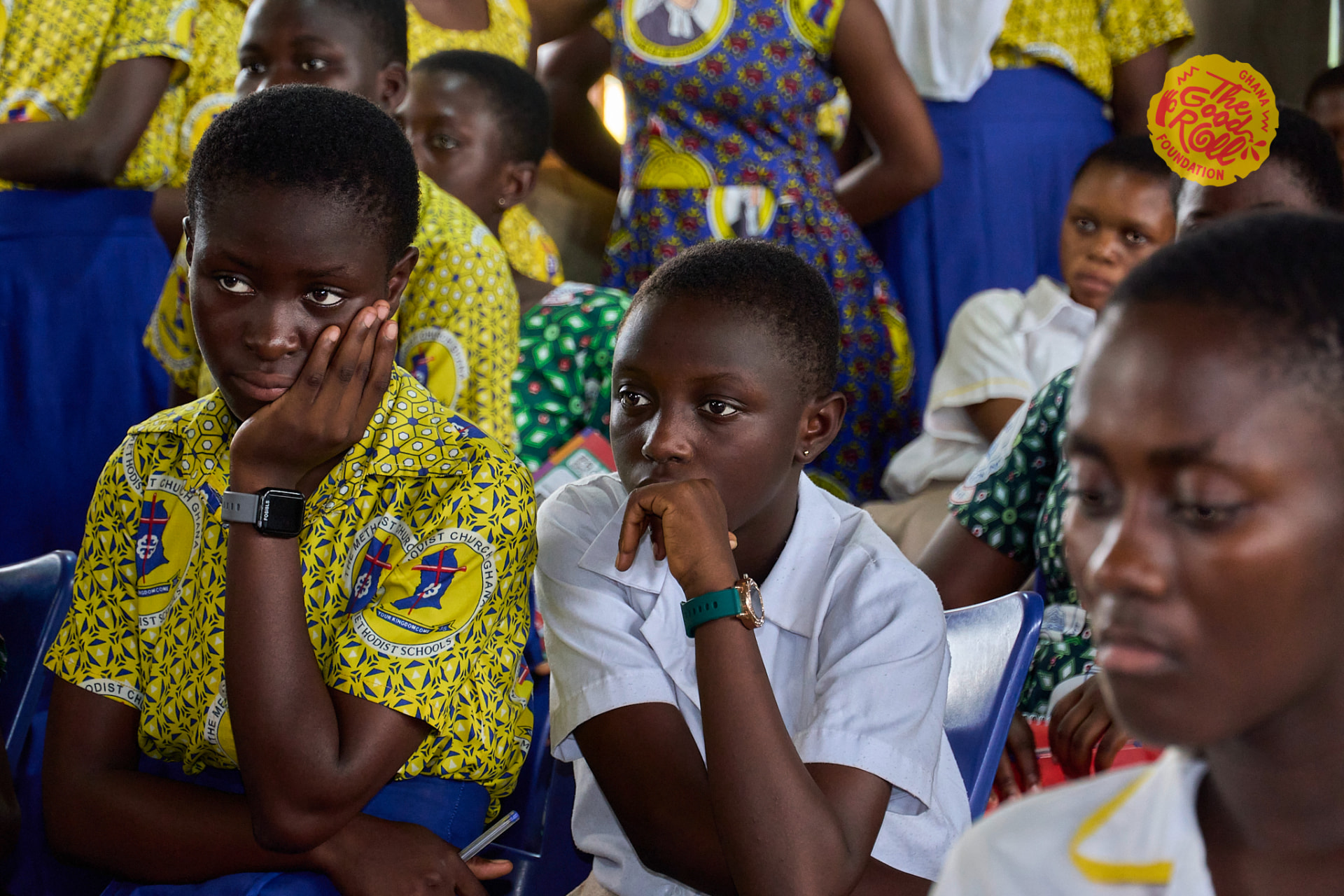
Why we support this
At The Good Roll, we believe basic needs are not a luxury. Toilet paper, clean water, a toilet and sanitary pads are preconditions for health and equal opportunities. Our MHM programme tackles the causes, not just the symptoms: knowledge against taboo, support against shame and a sustainable product against cost.
The result? Girls who simply go to school. Every day of the month.
Help us: give a girl her school days back
With a donation, you make sure a girl in Ghana no longer has to choose between her period and her education for a whole year. Donate now or share this article, so more people know that a period should never be a reason to miss out on opportunities.
Frequently asked questions
- How many girls miss school because of their period?
- According to UNESCO, 1 in 10 girls in sub-Saharan Africa. In Ghana an estimated 95,000 girls are affected.
- What is period poverty?
- A lack of access to menstrual products, education and safe sanitation facilities.
- Why reusable pads?
- They last at least a year, save families monthly costs and produce no waste.
- Why do boys get lessons too?
- Because stigma and teasing only disappear when the whole class understands what menstruation is.
Sources
- UNICEF Ghana: Menstrual Hygiene Day 2026
- Ghana News Agency: Poor WASH facilities, period poverty keep Ghanaian girls from class (2026)
- Ghana News Agency: The silent struggles (2025)
- World Bank: Globally, periods are causing girls to be absent from school
- UNICEF: No more missing school because of monthly periods
- Thomson Reuters Foundation: Period pad prices push girls out of school in Africa
- Global Citizen: Period pad prices and girls missing school
- Hennegan et al. (2021): School and work absenteeism due to menstruation in three West African countries
- Montgomery et al. (2012): Sanitary Pad Interventions for Girls' Education in Ghana
- University of Oxford: trial of puberty education and sanitary pads in Uganda
- Hennegan et al. (2017): A qualitative understanding of the effects of reusable sanitary pads and puberty education
- The Good Roll Foundation: World Menstrual Health Day campaign